A ceremony of remembrance for the women of the crossing
Toco · Trinidad
Crossings & Flightcalls Gang Gang Sara and the other enslaved women of the crossing back into memory, in a grandmother’s house and on a bluff in the Atlantic.
Geographies of Memory Across Two Scales
At the Quotidian Scale of a House
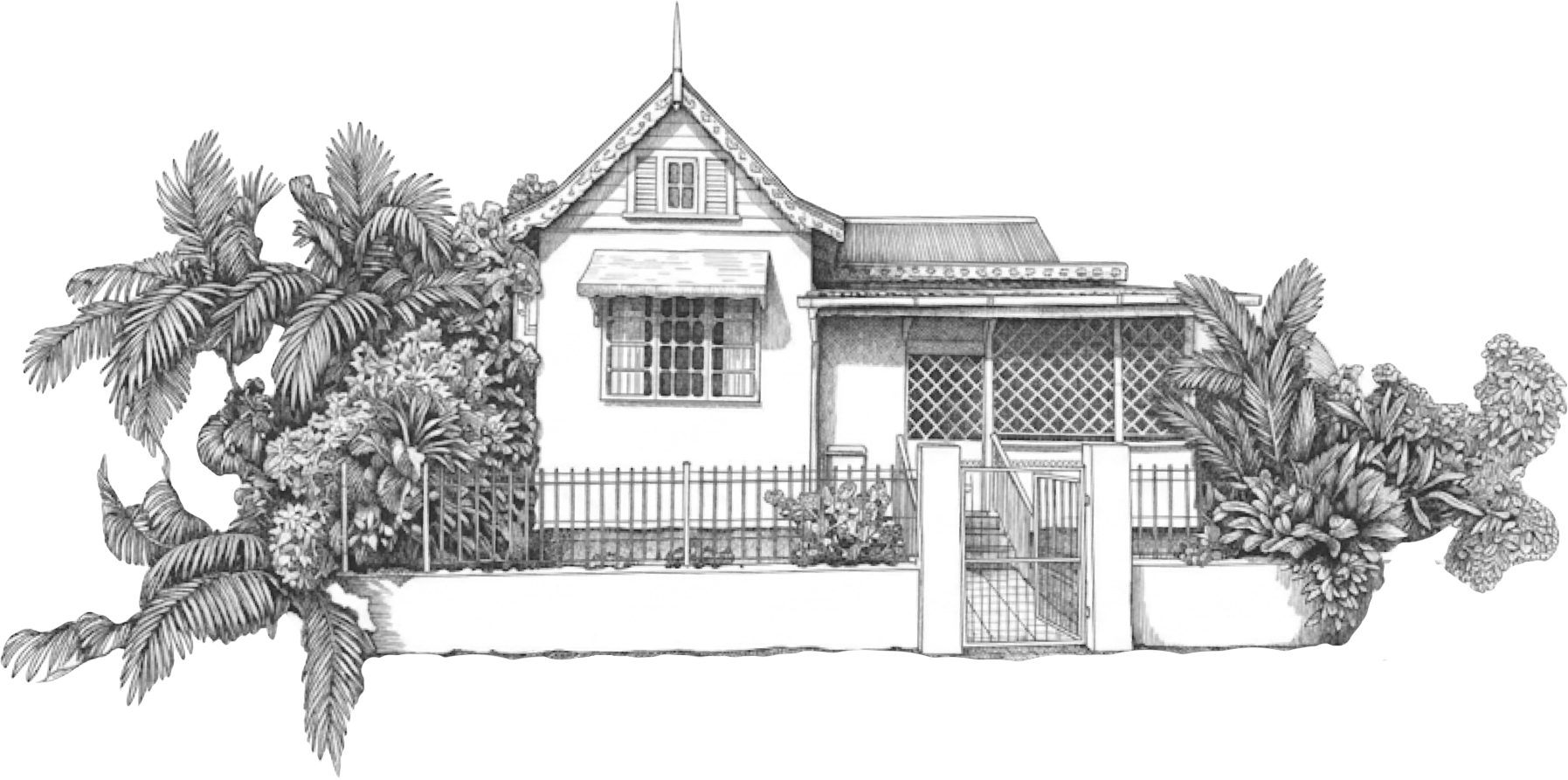
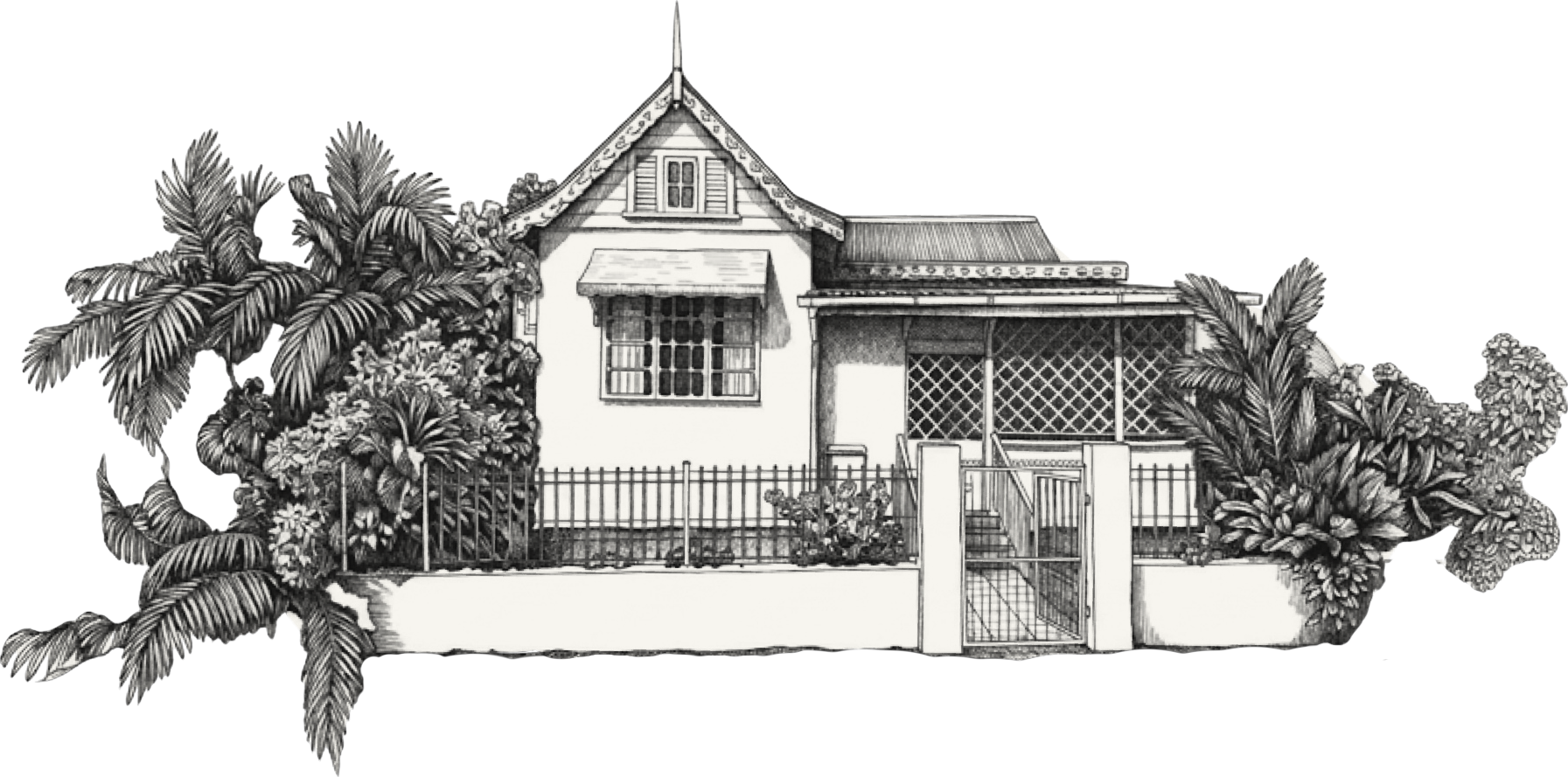
In the Caribbean, a grandmother’s house takes in whoever needs a home. Gang Gang Sara, a woman enslaved in Tobago in the 1700s, lies in a neglected grave at Golden Lane. In a house in Port of Spain, already home to the exhibition Speaking in Shadows, she is taken in. Through her, we honor the women whose names were never recorded.
Her room stays open for the length of the exhibition: a place to sit with her, and with the women of the crossing.
At the Monumental Scale of an Ocean Bluff
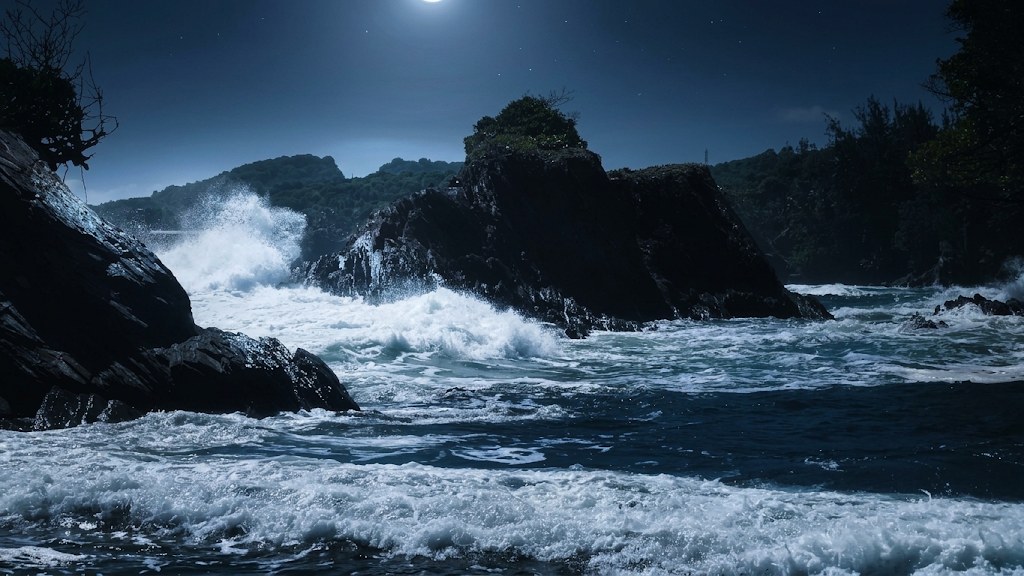
This is a ceremony by the sea. For one night, moving images are cast in light onto an ocean bluff where the Atlantic meets the Caribbean.
In the Caribbean, the sea holds our memory. Here, a cohort of women gathers to remember the enslaved women carried across the Atlantic, both named and unnamed.
Where are your monuments, your battles, martyrs? Where is your tribal memory? Sirs, in that grey vault. The sea. The sea has locked them up.
Derek Walcott · The Sea Is History
The Atlantic is the water of the crossing. Over three centuries, more than twelve million Africans were carried across it in slavery. Nearly two million died on the way, and many chose the sea, leaping from the ships rather than accept their fate. For their descendants, the Atlantic is a burial ground with no markers.
The sea remembers. In 1803, at Igbo Landing in Georgia, enslaved Igbo people walked into the water singing, choosing the sea as their road home. And still today, across the Caribbean, we go to the sea in times of trouble. We bathe in it to heal and to cleanse. Here we scatter the ashes of our dead, here we baptize our infants. The sea holds both the crossing and our ways of answering it.
The sea remembers us.
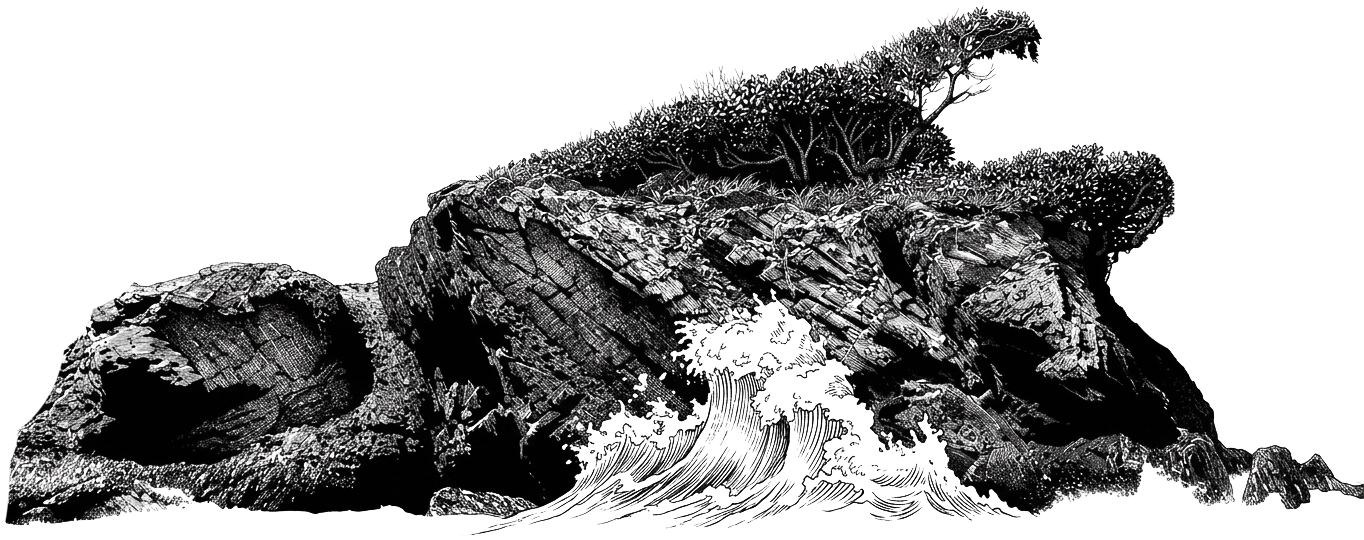
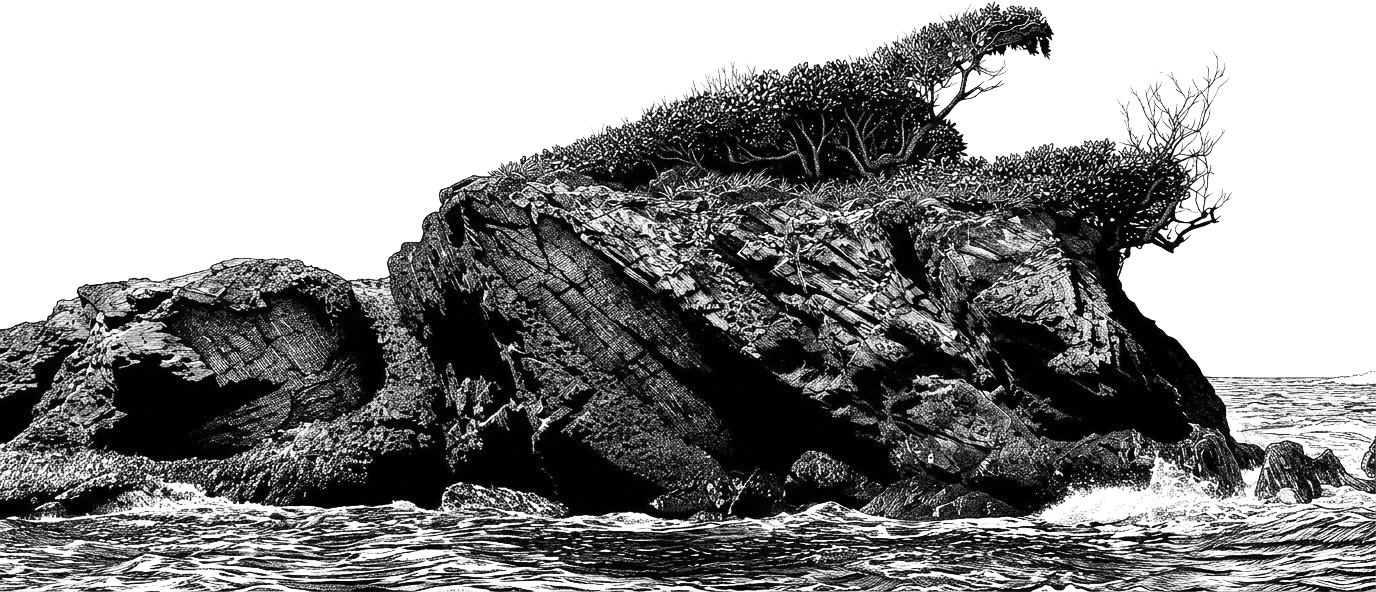
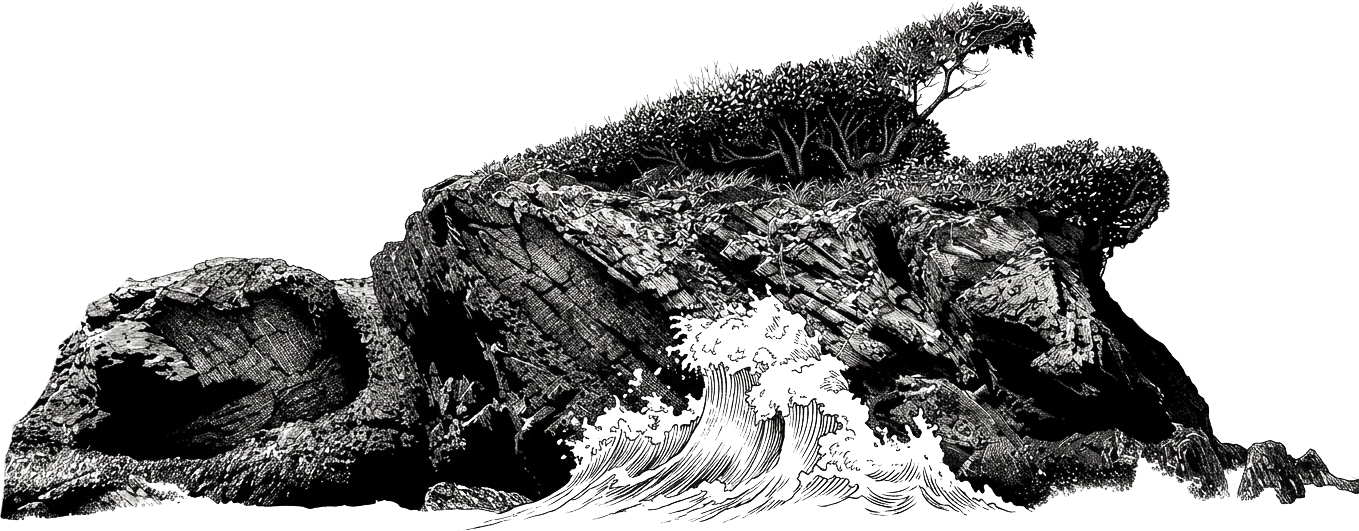
On the northeastern tip of Trinidad, on the grounds of an old convent at Cumana, steps lead down to a hidden beach that almost no one knows. Here, where the Atlantic Ocean meets the Caribbean Sea, the two waters churn against each other. And just offshore, a great bluff of rock rises out of the sea.
Here, at the seam between the crossing and the arrival, we come to remember the women, to be remembered by them, and to remember ourselves. To call them home, to set us free.
Under the cover of night, we will awaken this rock with light. Moving images will be cast across the face of the bluff, figures rising out of the sea and up the stone, watched by those gathered on the beach at its feet and along the cliffs above, while drums and voices sound from the shore.
Toco, Trinidad
Gang Gang Sara
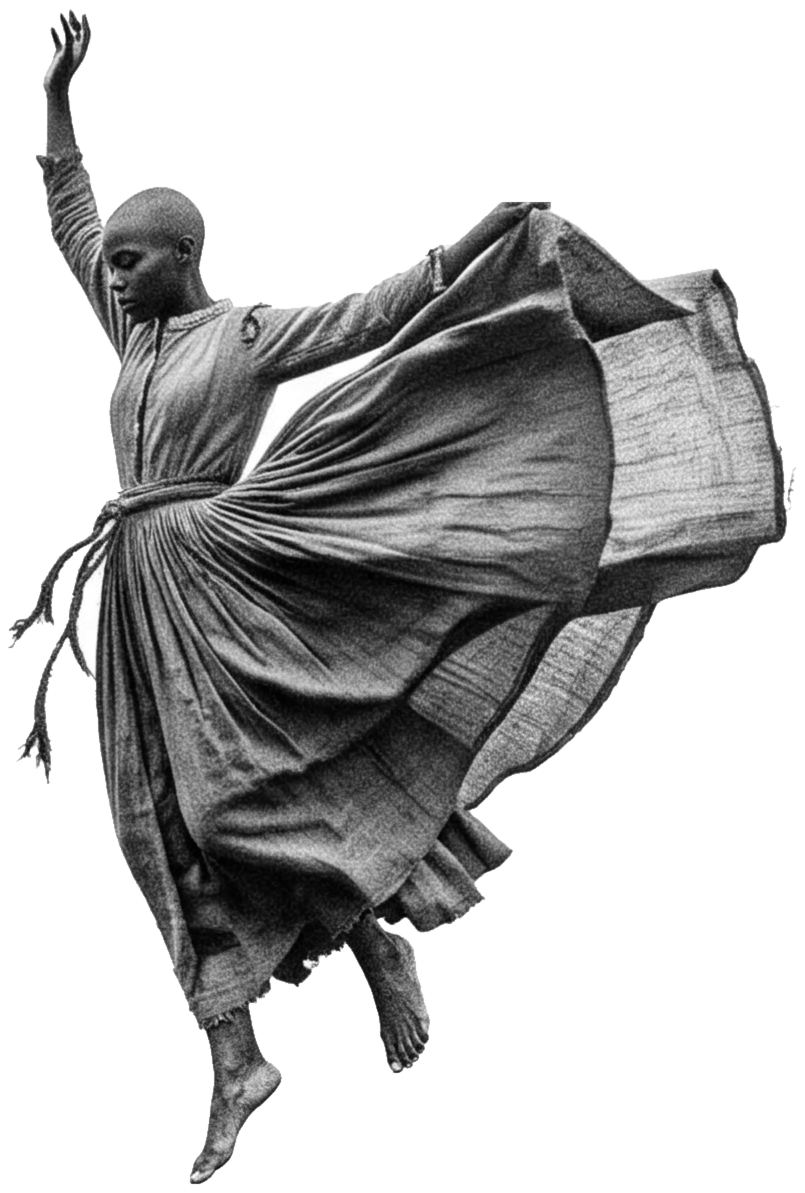
In Tobago, they still tell of Gang Gang Sara. She was an African woman who could fly.
On a stormy night, long ago, she rode the wind across the sea, searching for the family who had been stolen from her.
Of all her people, she found only one: Long Tom, whom she had known as a child in Africa, now enslaved on the Golden Lane plantation.
She stayed beside him in bondage. She became midwife and healer to the enslaved, a mother to people who were not her own, and she loved Tom.
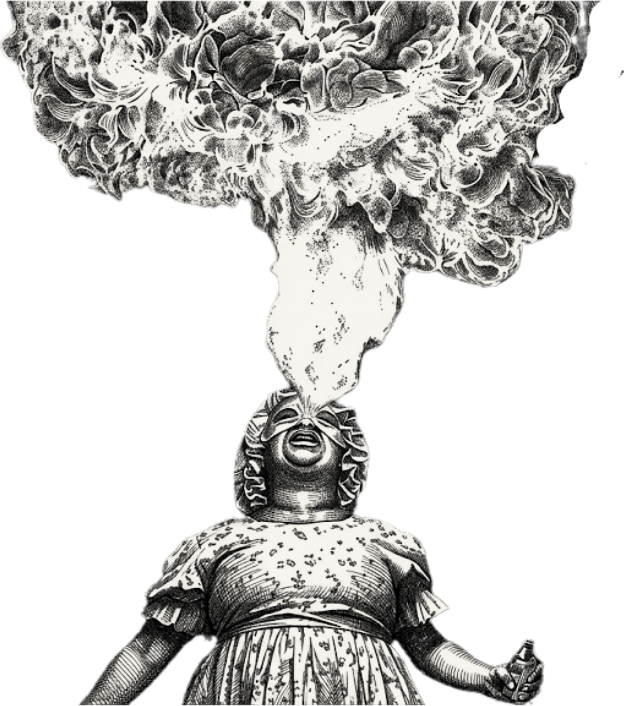
There was one rule for Sara: to keep her power to fly, no salt could ever pass her lips.
But she and Tom had become favorites of the master of Golden Lane, a man they called Grandfather Peter. He wanted to keep Sara for his own, so he fed her food salted in secret.
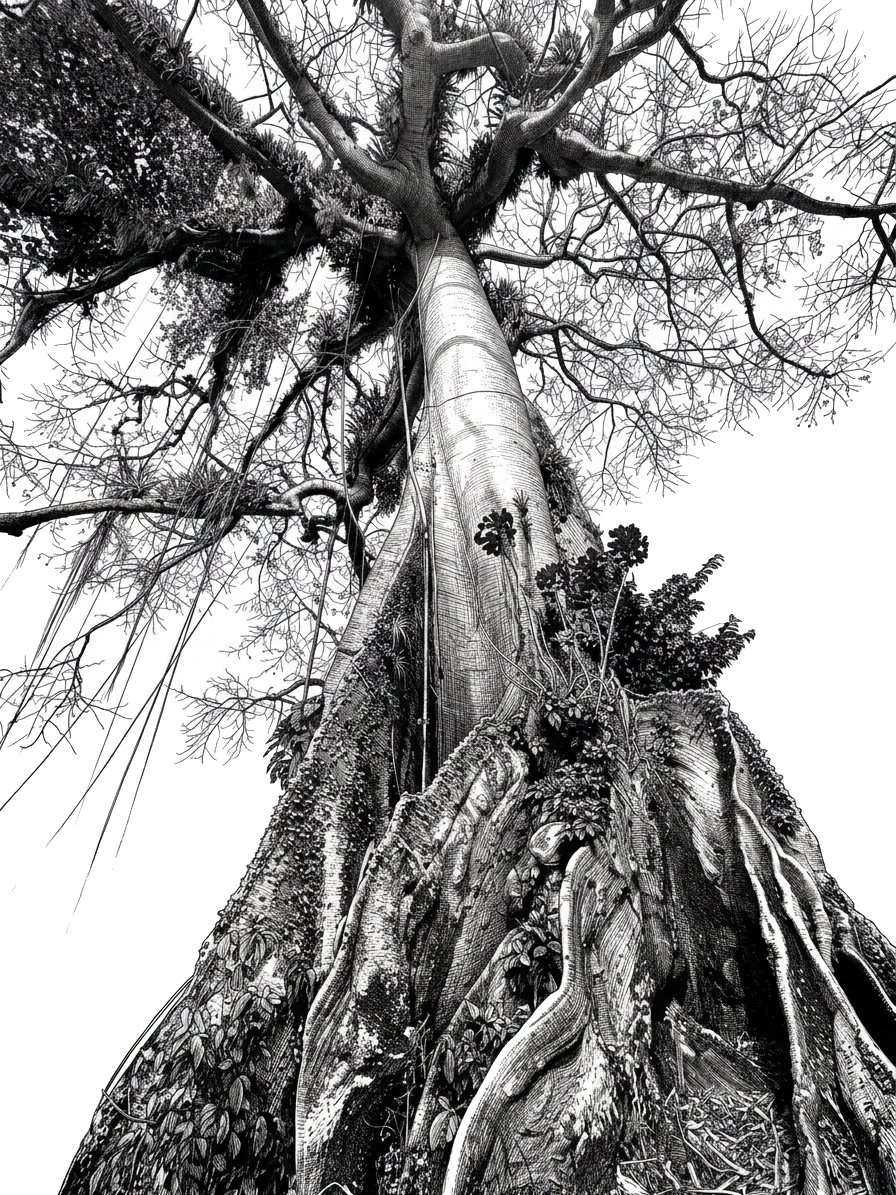
When Tom died, the old longing rose in her. She went to the great silk cotton tree, the tree where spirits live, the place where she had promised to meet him.
She climbed it to fly, to fly, to fly.
But the salt had taken her power. She fell, and there she died.
They buried her beside Tom in Golden Lane, beneath the silk cotton tree. Her grave is still there to this day.
The Silk Cotton Tree
Tobago
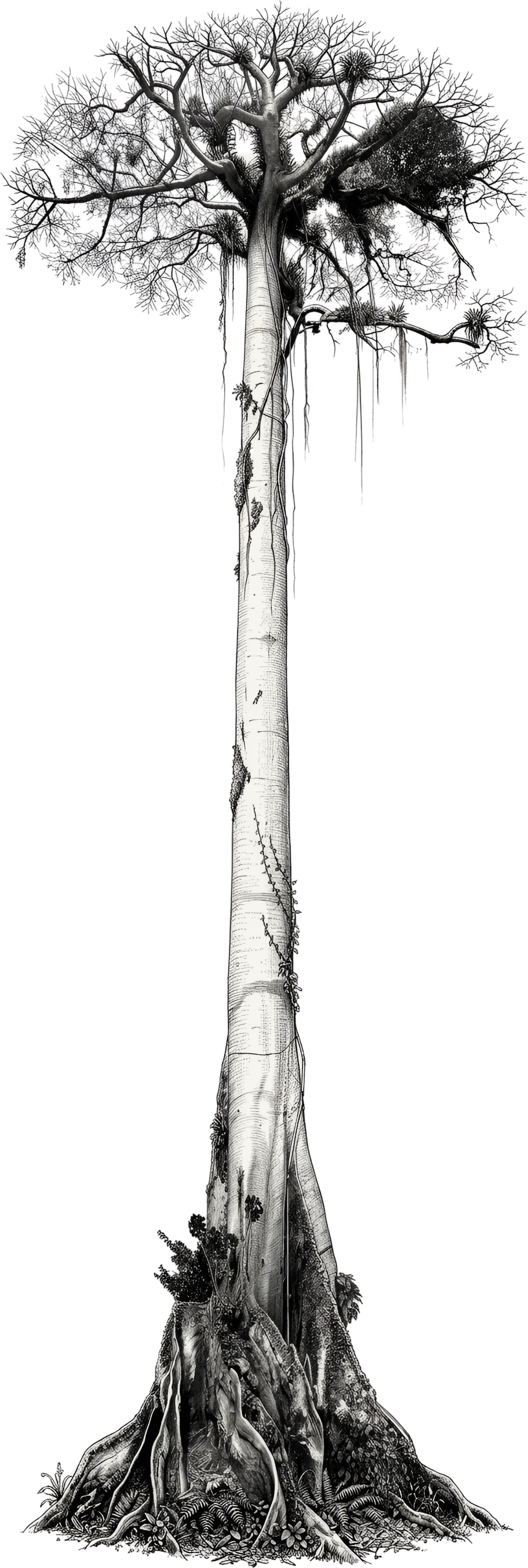
The silk cotton is the sacred tree of the Caribbean, the dwelling of the dead, the one you dare not cut. In Tobago it is her tree: the tree she climbed to fly home.
Her grave still lies at Golden Lane, in the old plantation cemetery. One of Tobago’s folk heritage sites, it has fallen into neglect, its tombs crowded and nearly forgotten.
Part of our hope is that this work calls attention back to Sara, and to the place where she rests, so that her grave is tended, and her tree and her story remembered.
The Salt
From Tobago to the coast of Georgia, to the histories Zora Neale Hurston gathered in Jamaica, enslaved Africans told of people among them who could fly. But the stories kept one rule: whoever ate salt would grow too heavy for the wind.
To fly, to fly, to fly…
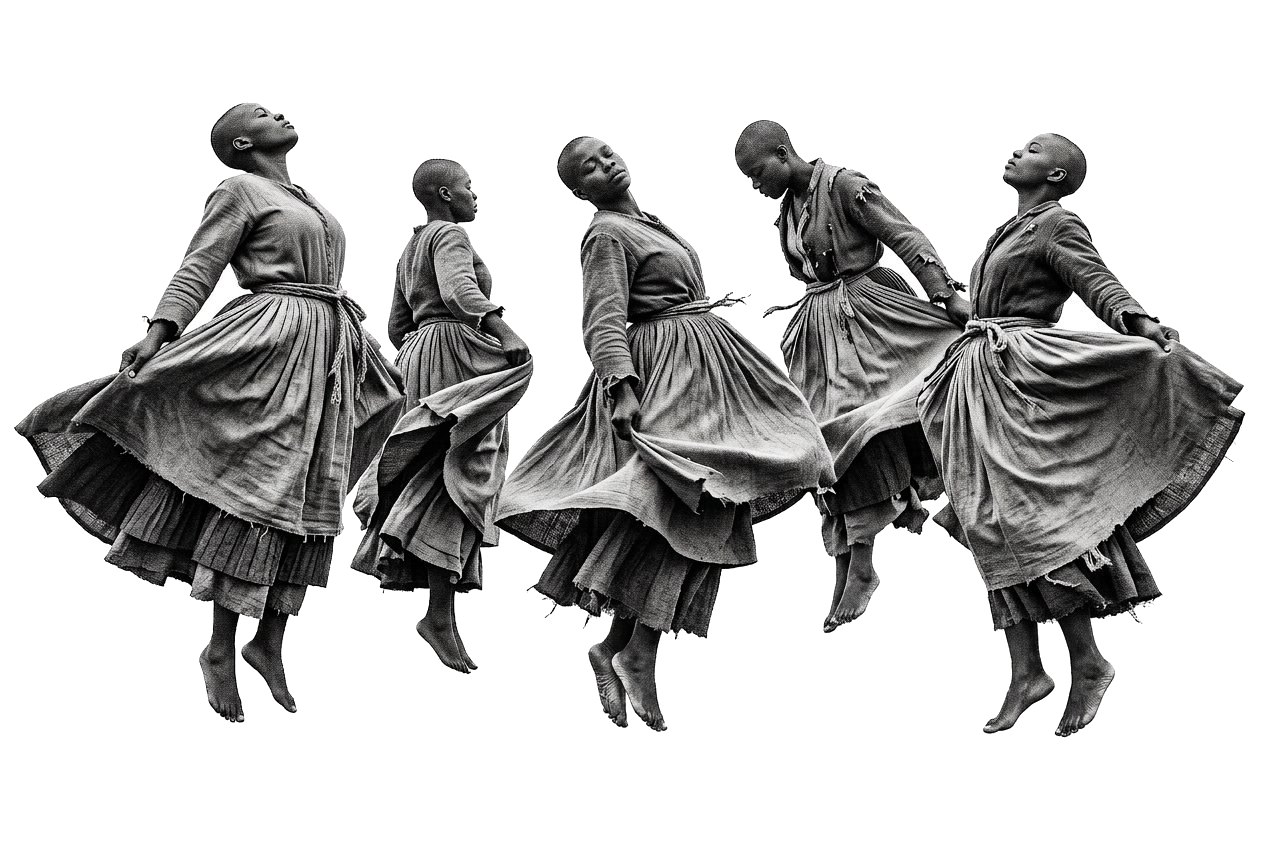
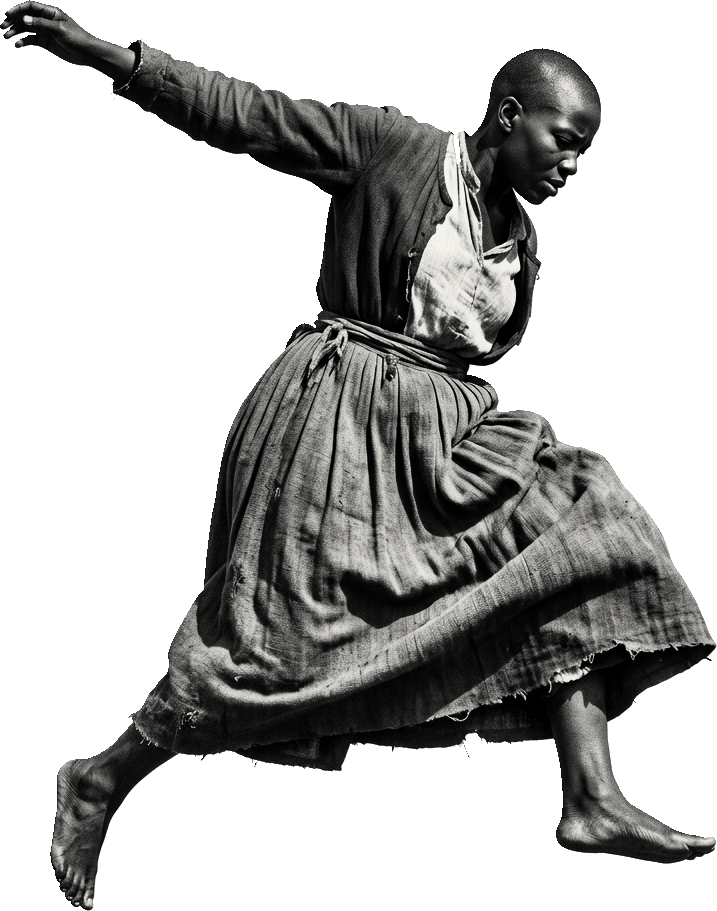
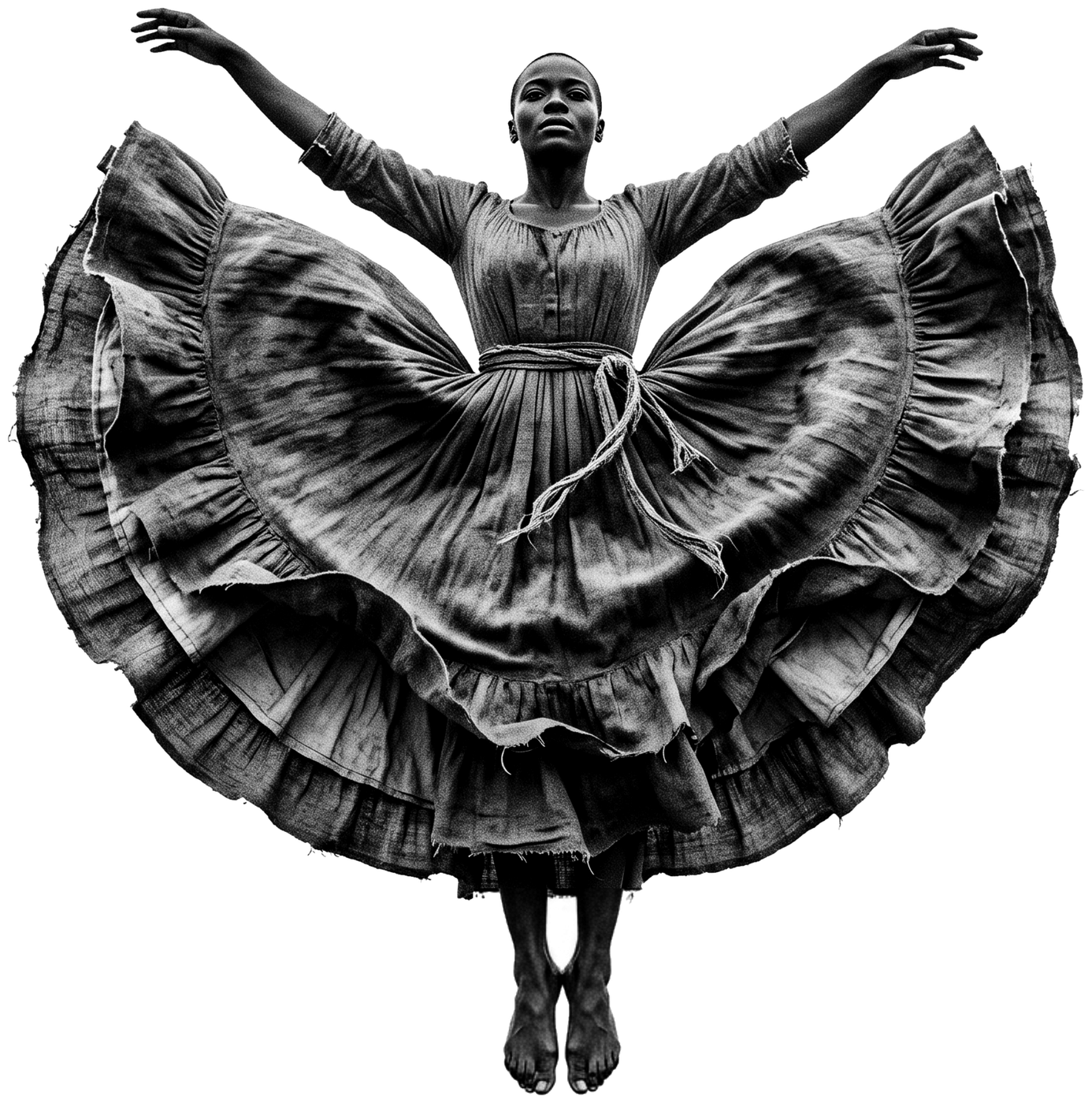
Sara is the name we can hold for all the women whose names were never kept. Their figures rising, rippling, dancing over the rocks, their flight caught in light, in the mist of sea spray beneath.
The Nightis one evening on the bluff at Toco, a projection at monumental scale. Cast onto the rock: designs of light, archival footage, lines of Caribbean poetry about the sea, and the women themselves, who dance across the folds of the stone and ride the crashing waves.
The bluff at Toco, at night.
How It’s Done
The Projection
Moving images are projected onto the face of the rock itself. The stone is first surveyed and mapped, and the images are shaped to its folds and hollows, so they seem to live on the rock rather than sit on a screen. This technique is called projection mapping.
It calls for a single high-powered projector, a mapping designer, a generator, and nights of rehearsal at the bluff.
The Location
The beach lies on the grounds of an old convent at Cumana, Toco, on the northeastern tip of Trinidad, where the Atlantic meets the Caribbean Sea. The compound is secure, and the beach can be reached only through its grounds.
The convent is already set up to host large gatherings: a meeting room, a kitchen, ample bathrooms, beds for an overnight stay, and grounds that can accommodate musicians and performers. A generator can bring additional power to the shore.
Comparable Works
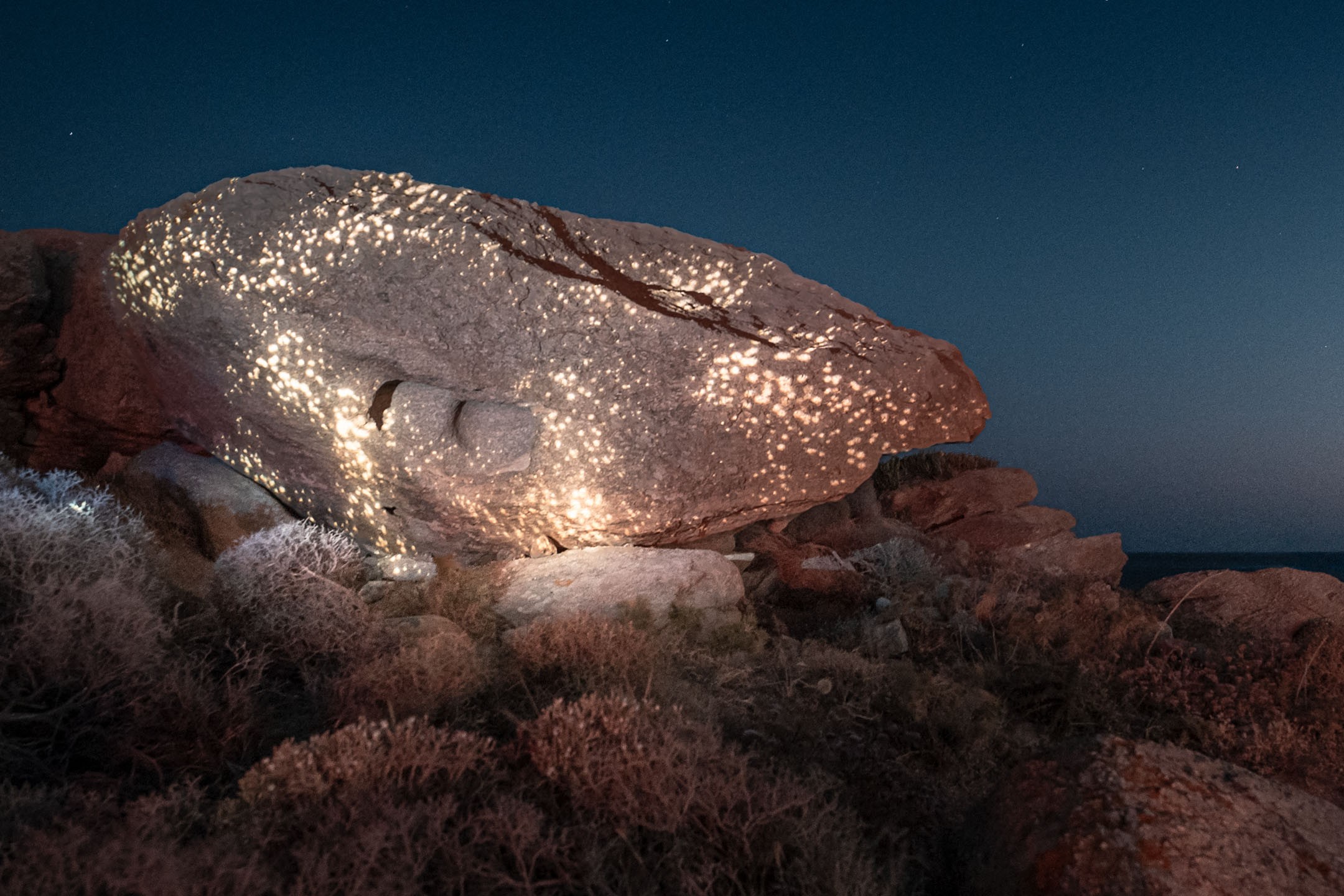
Philipp Frank, Scorpios Encounters, site-specific projection mapping. Scorpios, Mykonos, with HOFA Gallery, 2025.
Light held on natural coastal stone, at the scale of a bluff.
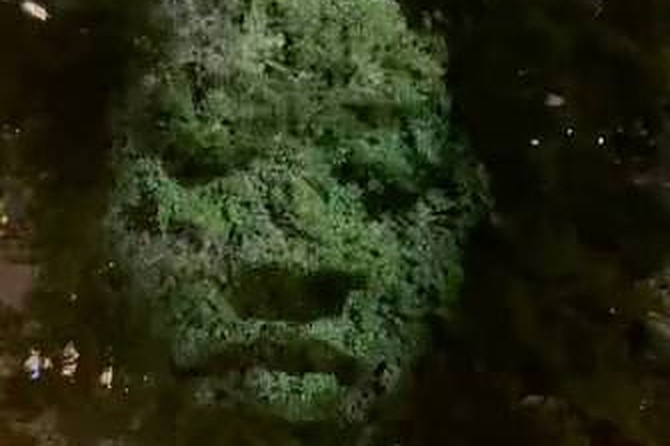
Craig Walsh, Monuments, three-channel video projection on living trees, 2017.
A human presence summoned out of the dark, in a living landscape.
Proposed Launch Date
April 2027
The Crossings Teambrings together years of practice in oral history, moving image, and large-scale, site-specific installation. Its members have collaborated on significant civic commissions: Jennifer Wen Ma’s Wings of Everchange, a permanent installation commissioned through New York City’s Percent for Art program, for which Nyssa Chow leads the participatory oral history and Daniel Arturo Almeida serves as production manager; and Speaking in Shadows, their co-created exhibition now on view in New York and coming to Trinidad in April 2027.
The ArtistCollaborators
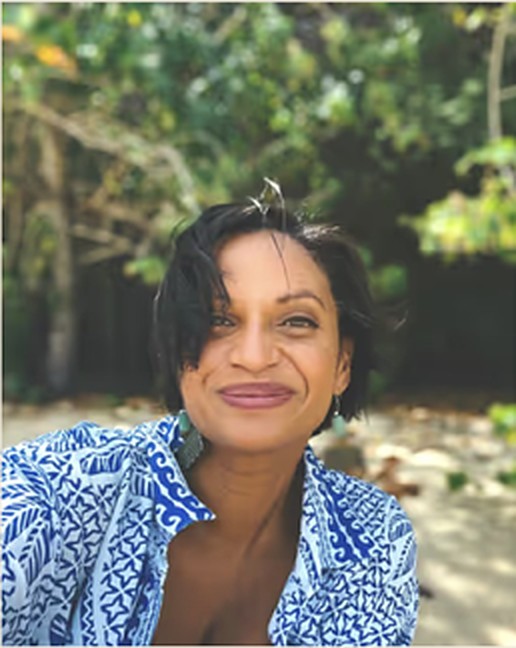
Nyssa Chow
Nyssa Chow is a memory worker, oral historian, artist, and writer from Trinidad whose work draws on the memory practices of the Caribbean and the Global South. Her work attends to the poetry of ordinary lives: ways of being and knowing held by those who live on the margins of agency. Through installation, social practice, and documentary art, she builds otherwise architectures for remembering: place-based, communal, embodied, relational.
She is faculty at the Oral History Master’s Program (OHMA) at Columbia University, and a 2027 Artist-in-Residence at the Stellenbosch Institute for Advanced Study (STIAS), South Africa. She has received national commendations for her civic artwork Trace: A Memorial, and was awarded the PEN/Jean Stein Grant for Literary Oral History for The Story of Her Skin.
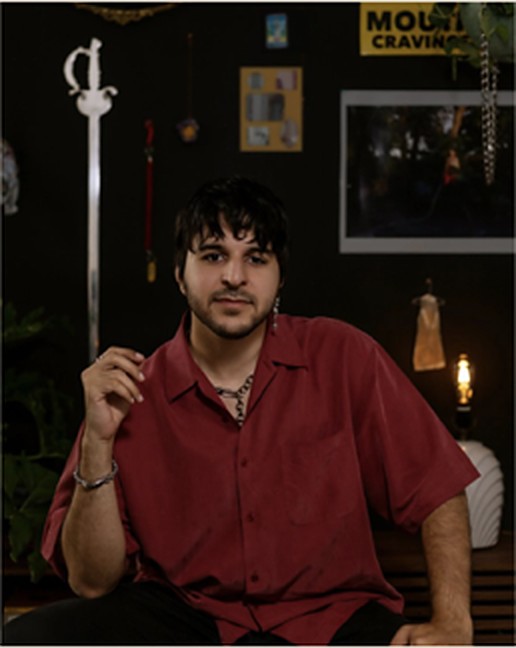
Daniel Arturo Almeida is an artist working through photography, installation, painting, and digital media. His practice chronicles intimate and collective stories in the Americas. Marked by inter-generational migrations, Almeida weaves fragmented stories through archival materials, melodies, documents, and footage to resignify historical manipulation, nostalgia, collective amnesia, and longing.
Selected exhibitions include The Elephant Never Forgets (2024, Locust Projects, Miami) and Glow in The Dark (2021, A.I.R. Gallery, Brooklyn). He received a curatorial fellowship at The Latinx Project at NYU (2021), and a membership at NEW INC, New Museum, New York (2022).
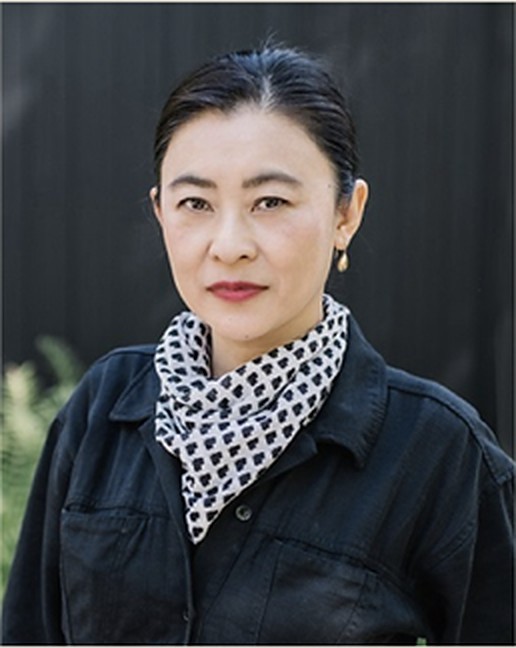
Jennifer Wen Ma is an interdisciplinary visual artist working across installation, painting, video, public art, performance, and social practice. Ma’s work brings together unexpected elements, narratives, and traditions, merging philosophical inquiry with contemporary materials to create poetic, emotionally resonant, multi-sensorial experiences.
She was a member of the core creative team and chief visual effects designer for the opening and closing ceremonies of the 2008 Beijing Olympics. Her large-scale, site-specific works include Nature and Man in Rhapsody of Light at the Water Cube, Beijing; Black Beauty: A Living Totem at the Vancouver Art Gallery; Paradise Interrupted, which premiered at Spoleto Festival USA; and Wings of Everchange, a permanent monument at 70 Mulberry Street, New York.
She is currently working on two major public artworks for the NYC Cultural Affairs Percent for Art program: the renovation of 70 Mulberry Street, and the Chinatown Welcome Gateway.